
Colorado’s Largest Reservoir Is No Longer the Largest
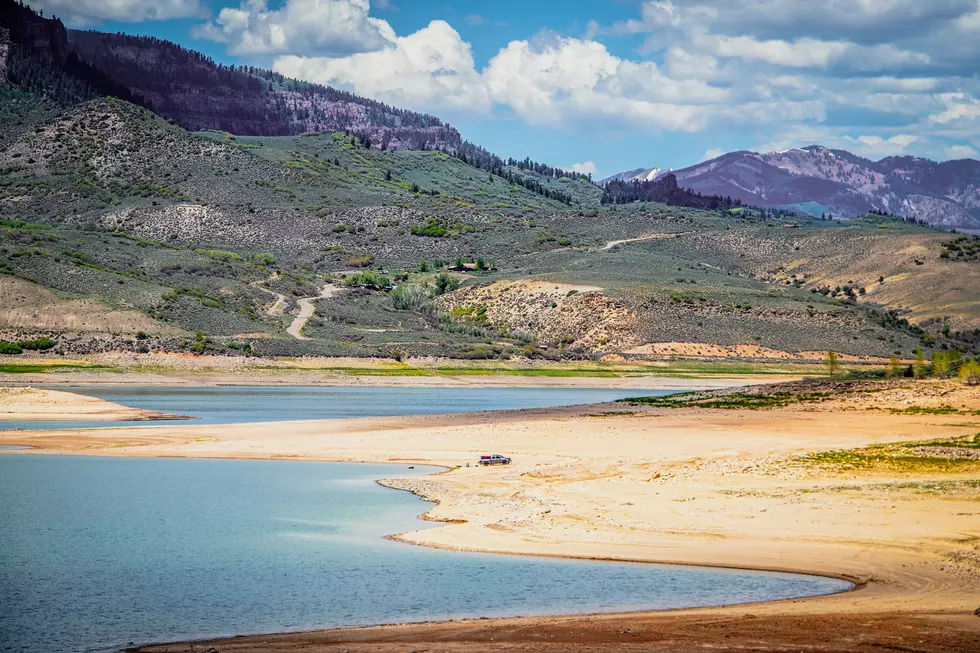
If you follow Colorado’s Blue Mesa Reservoir online, you may have noticed the water levels in the photos being shared this summer. As of mid-August 2026, Colorado’s Largest Reservoir has lost its title.
For decades, Blue Mesa Reservoir has been Western Colorado’s largest. This month, due to severe drought, the reservoir has fallen below 25% capacity. This has allowed another body of water with higher volume to take over as our state’s new leader.

Colorado’s Largest Reservoir Just Lost Its Title
Read More: This Colorado State Park Is Suddenly Everyone’s Favorite
Until more water is added to Blue Mesa, Lake Granby becomes our largest body of water in the state (for now). Lake Granby is currently at 62% capacity. Blue Mesa still has the larger maximum capacity, so this is a snapshot of current water storage—not a permanent change in the reservoirs themselves.
Blue Mesa can hold nearly 950,000 acre-feet of water, and covers over 9,000 acres at full pool. It’s so large that there is a two-unit power plant at Blue Mesa Dam, with an 86-megawatt capacity. With Blue Mesa below 25% capacity, the power plant’s ability to operate is at risk.

The Gunnison River Is Reappearing as Recreation Changes
Those who live within sight of Blue Mesa Reservoir have been able to see it all year. The reservoir received just 42% of its average inflow for the year, with April-July inflows estimated at only 24% of average. While the waters have helped the Western Slope battle several wildfires this summer, the extreme heat continues to lower the water level. The Gunnison River is reappearing through its old channel, while low water has already forced changes to boat ramps and marina operations.
Blue Mesa Is Revealing What Has Been Underwater for Decades
Read More: Colorado Lakes Where Snakes Love the Shoreline
As Blue Mesa Reservoir has fallen to roughly a quarter of its capacity, parts of the old town of Iola are once again visible above the waterline. The community was inundated when Blue Mesa Reservoir was created in the 1960s. The receding water has exposed old concrete foundations and other traces of the town that had been underwater for decades. Water levels are so low that major boat ramps at Blue Mesa Reservoir, including Elk Creek, Lake Fork, and Iola, are closed to trailered and motorized watercraft.
PHOTOS: The Elk Fire Update Western Colorado Needs to See
Gallery Credit: Wesley Adams
MORE: Should Downtown Grand Junction Have Kept the Water Features?
Gallery Credit: Wesley Adams
NEXT UP: These 10 Western Colorado Facts Sound Fake (But Aren’t)
Gallery Credit: Wesley Adams


